
Within the Wearable Technology design studio at Pratt, both myself and a colleague (Ziyu (Mark) Nie) were tasked to undertake a challenge; To design a permanent storage system for an inflatable habitat - The client was NASA. Within our journey we had to understand how to design something for space, so to guide us through the journey we had help from two people at NASA who acted as our mentors throughout the project. Needless to say, the outcome was a success and we were recognized as "Best Prototype" in the competition at Houston, TX.
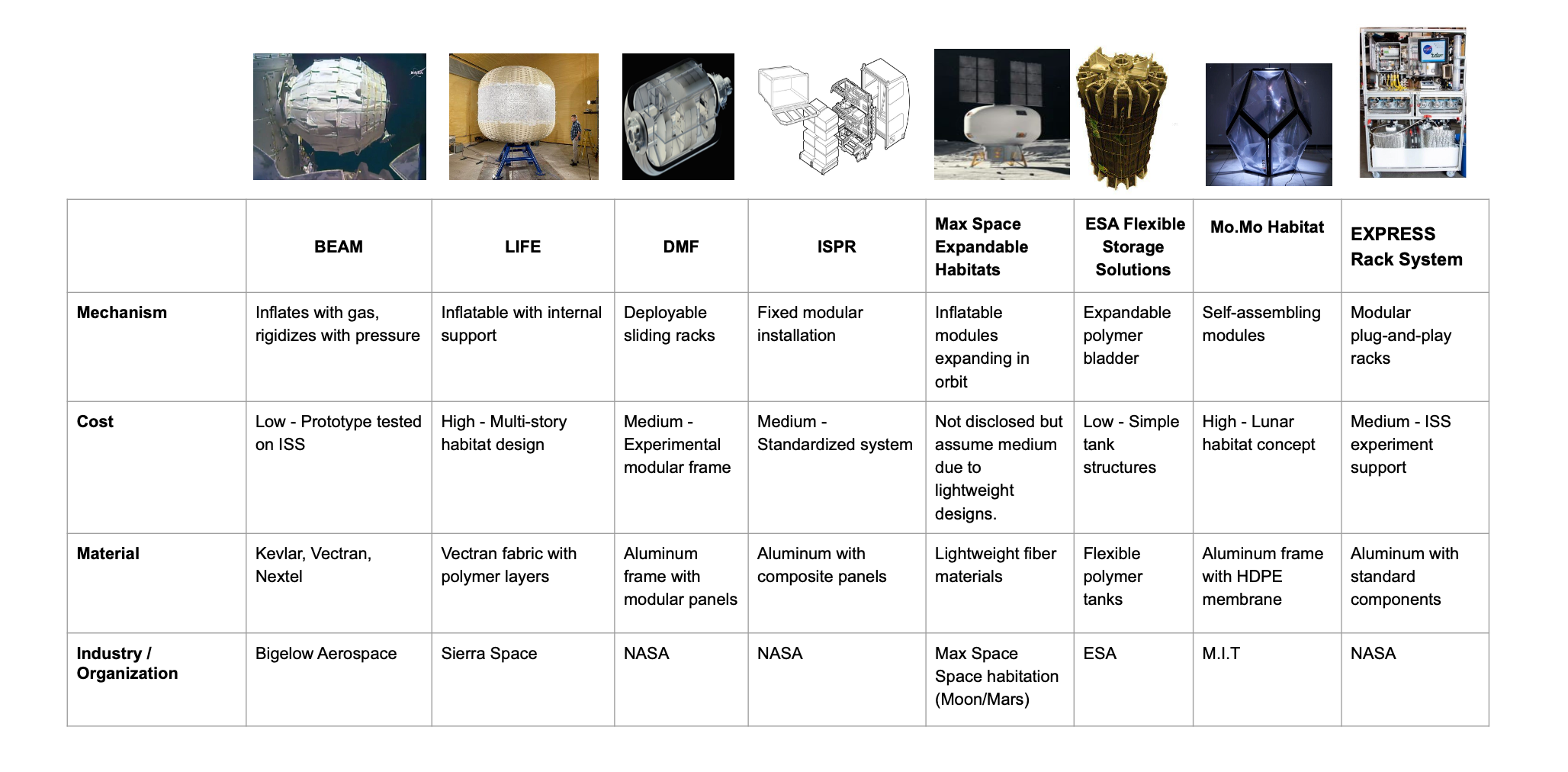
Competitive Landscape: Prior to undertaking this challenge, we had to create a competitive landscape of existing solutions that have been proposed, adopted or hypothetical. This was done in order to gain further insight and also inspiration of how our proposed model would eventually look like.
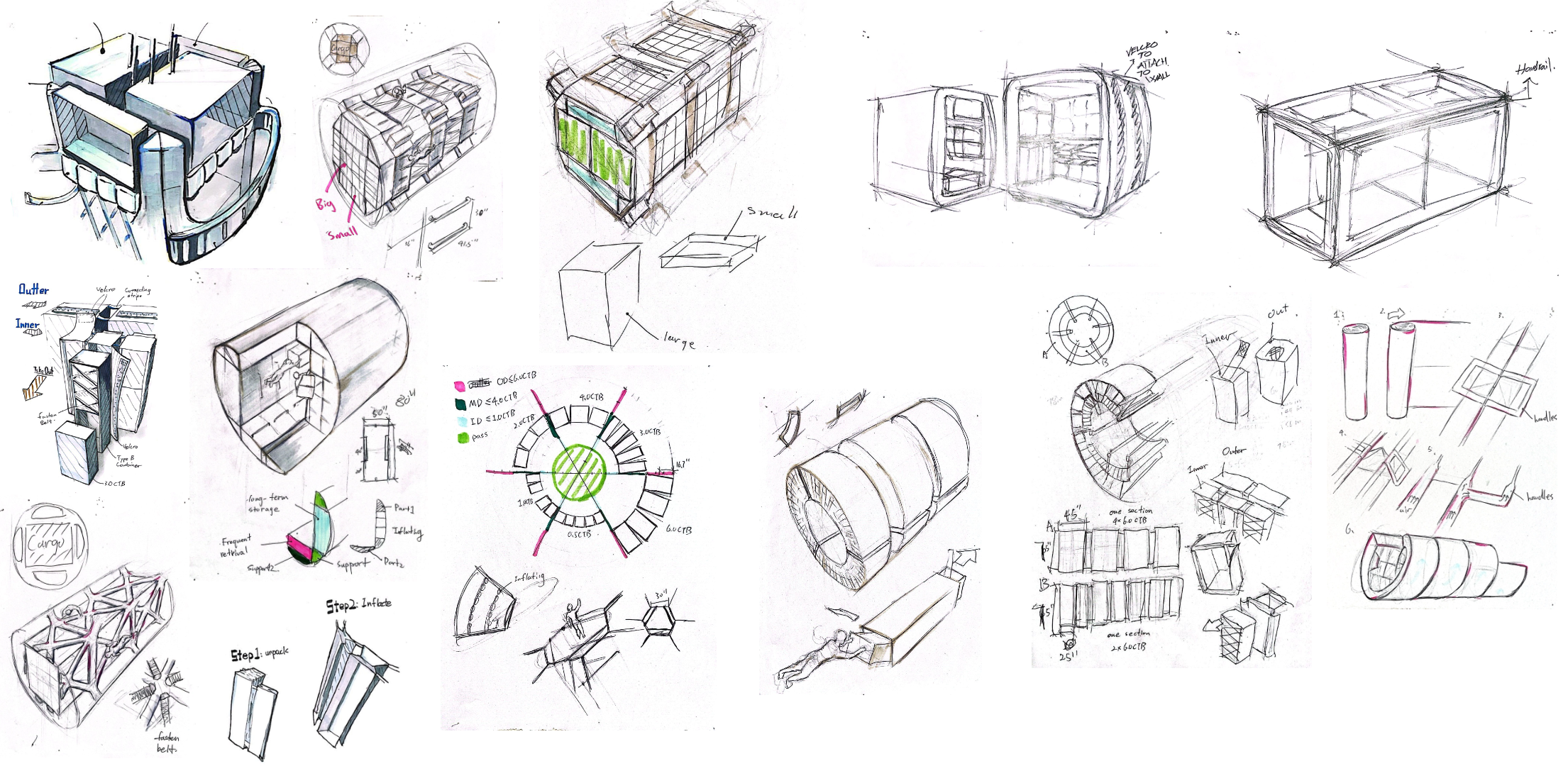
Ideation Sketches: We focused on deployment methods, structure and accessibility. We generated a plethora of sketches exploring differentmethods and geometries in hopes of finding viable solutions. We endedcoming up with three different concepts which will be discussed in thefollowing pages.
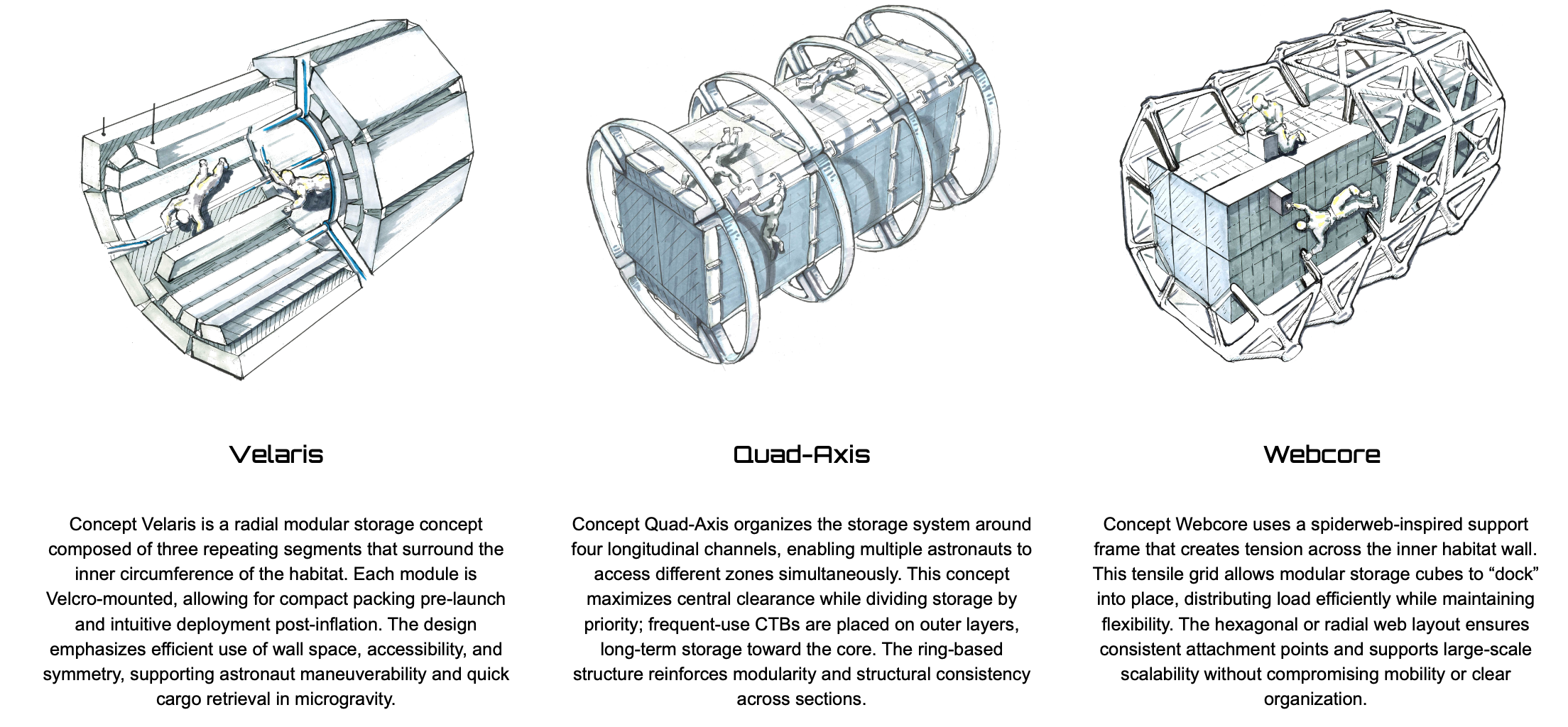
Proposed Concepts: After exploring various different methods of deployment and geometries, we proceeded on refining our scattered sketches into a more cohesive approach by creating three separate concepts to pitch to our mentor and gauge which is the best one to move forward with.
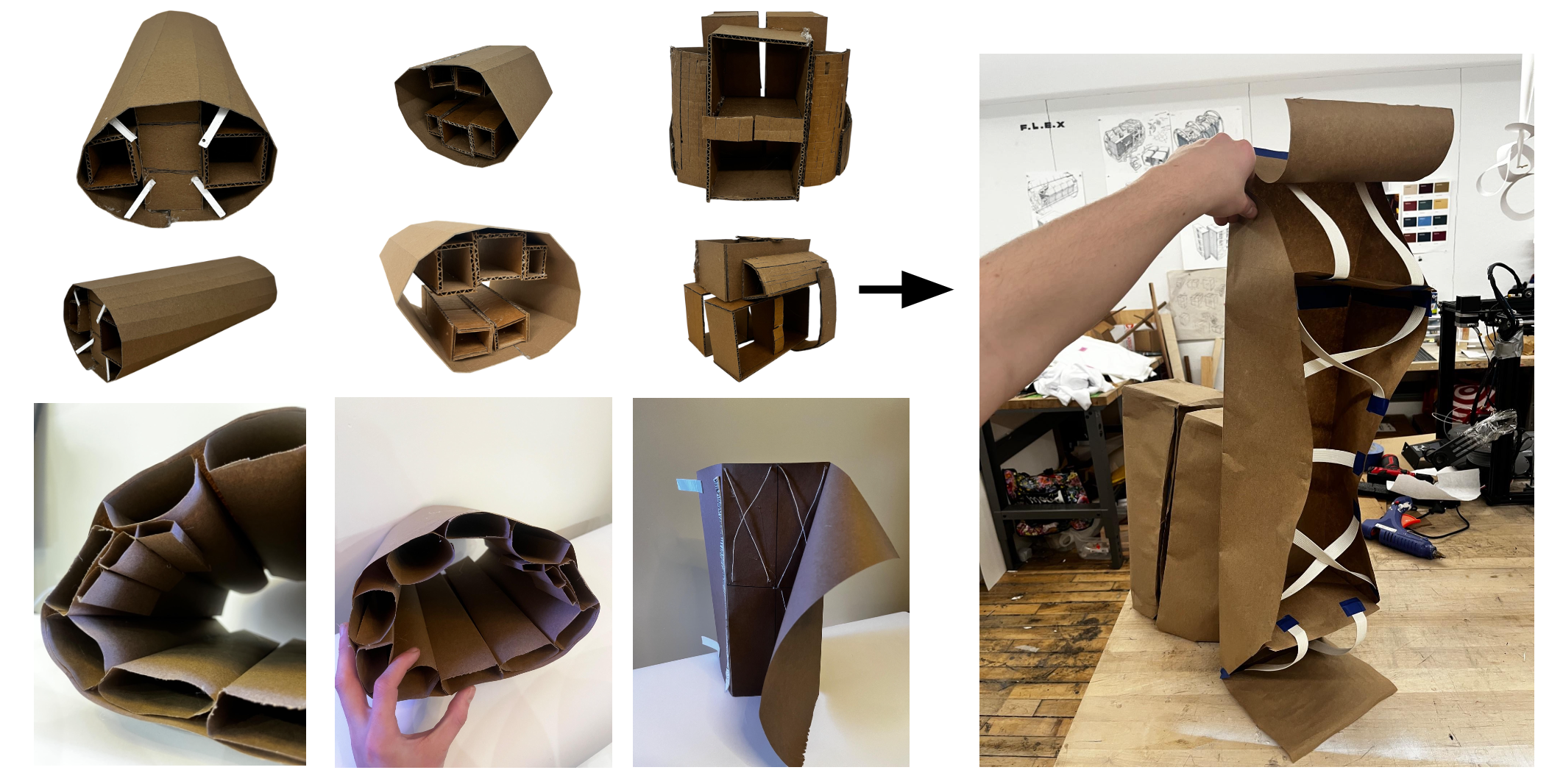
Mock ups: After presenting the ideas to our mentors, the feedback we got lead us to recognize that the first idea is great but the second and third are even better. The proposed game plan was to come up with one concept that combines both Quad-Axis and Telacore which were concept 2 and 3.
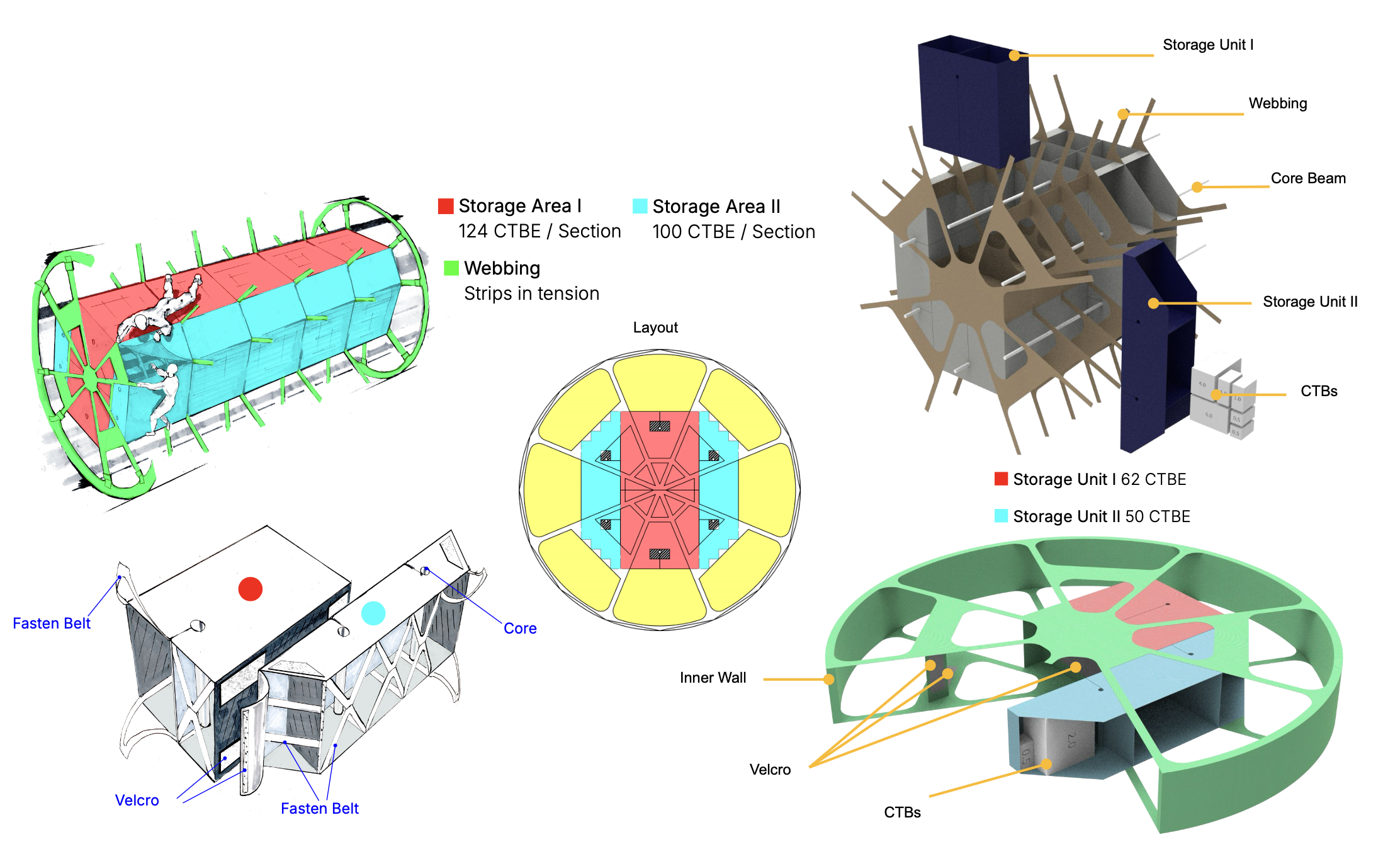
Final Concept: Having combined ideas 2 and 3 we came up with one effecient and noble idea which we coined Webcore.
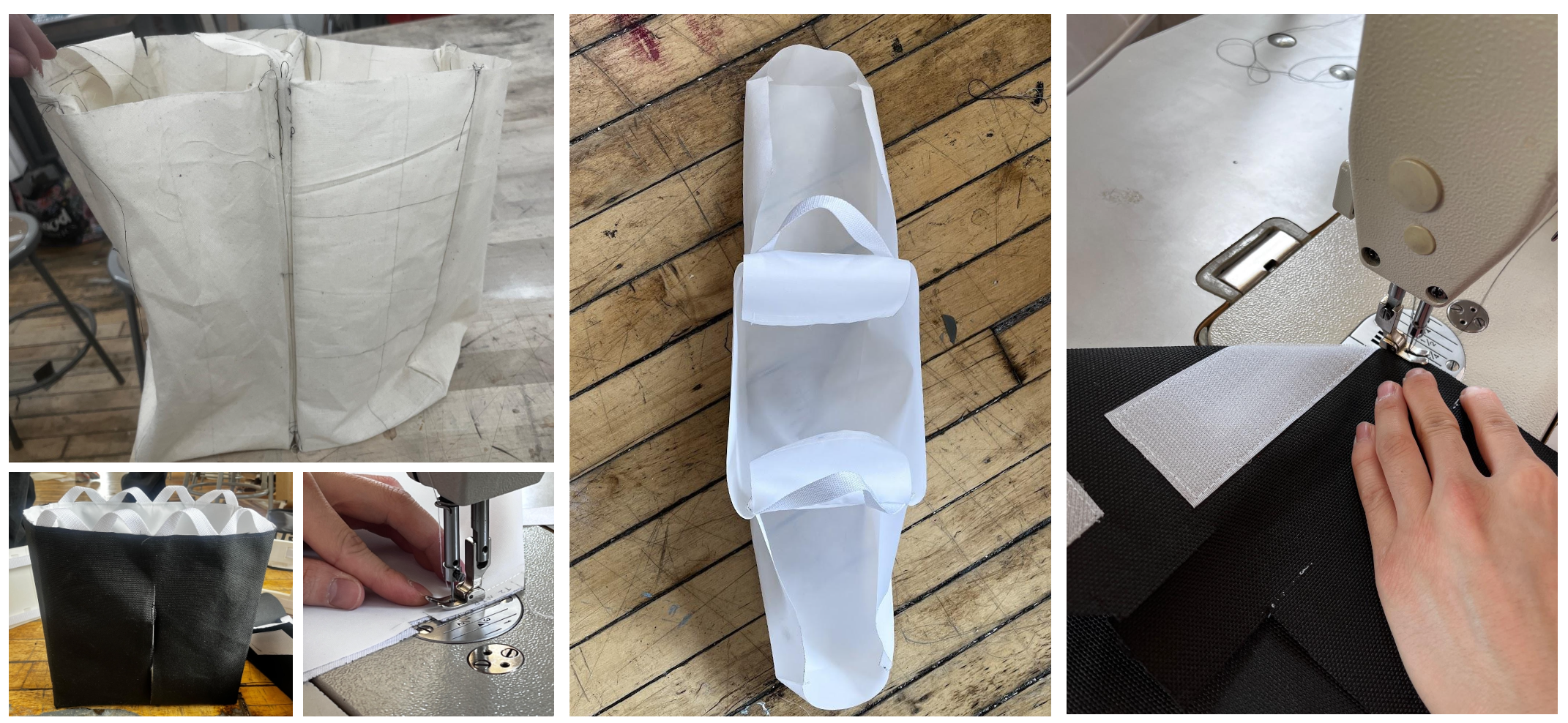
Fabric prototyping: Once our ideas were clearer digitally, it was time to move on to physical prototyping in final materials. We started with a muslin mock up of the first storage unit to gauge how it would behave in fabric, and once we were confident enough we started creating the inner lining of the second module of the storage unit.

Final Prototype: This full-scale module demonstrates our final storage unit design. It includes 3D-printed CTBs (Cargo Transfer Bags), adjustable buckle straps, and a Velcro-backed fabric shell.The unit attaches directly to the tensioned circular frame using pre-defined mounting points, confirming proper fit, secure attachment, and spatial efficiency within the inflatable habitat.
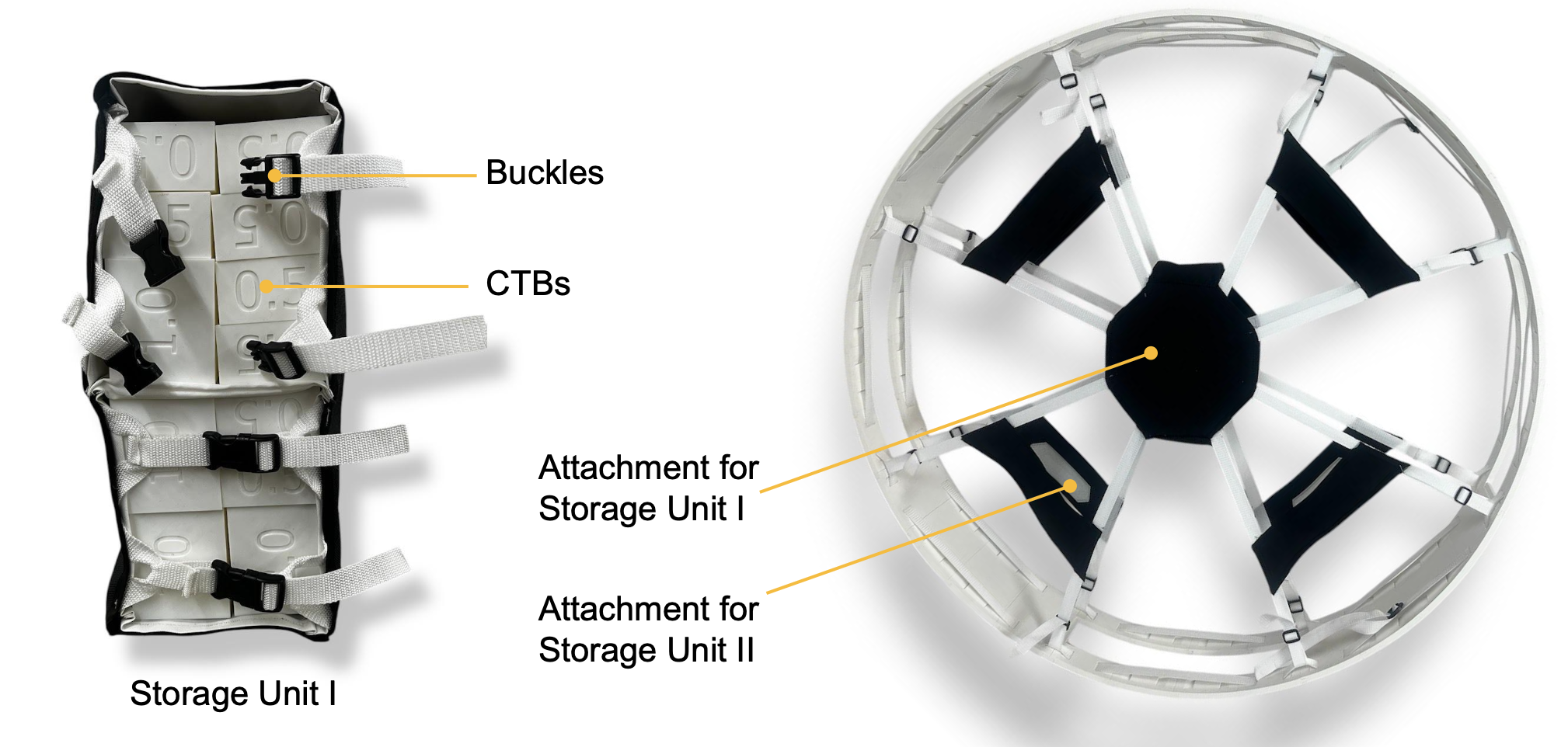
Features and Benefits: This prototype showcases our modular storage unit designed for inflatable habitats. Each unit fits CTBs from 0.5 to 6.0 and attaches to a tensioned inner frame using Velcro. Buckles secure the load, while designated zones separate short-term and long-term storage. The system is reconfigurable, lightweight, and optimized for astronaut access in microgravity.
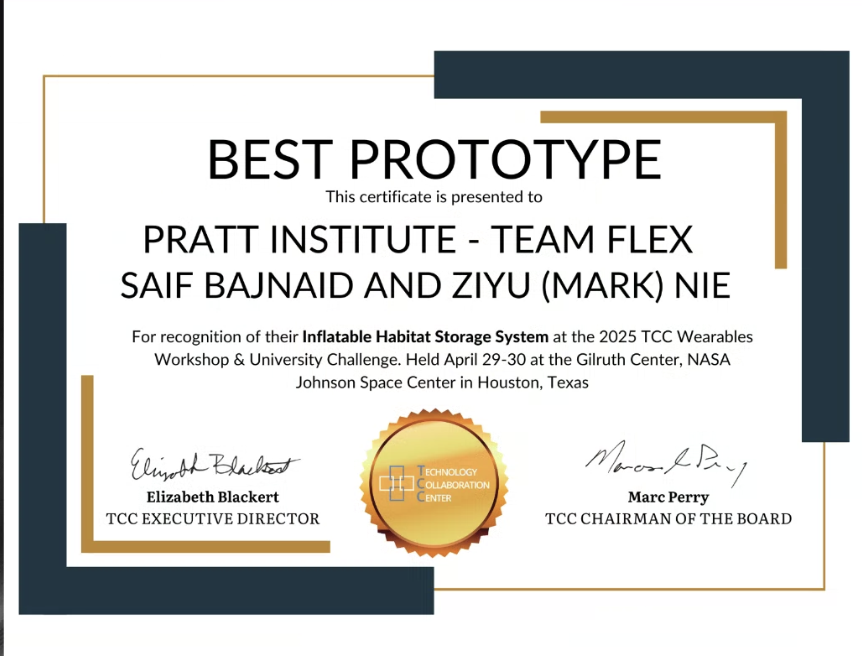
All in all, this was a memorable and insightful experience, with an amazing teammate and great mentors as well.